
2025 Annual Report
February 17, 2026
26 employees serving 44,592 residents across 4 rural & micropolitan counties
Mission
The South Heartland district Heatlh Department is dedicated to preserving and improving the health of residents in Adams, Clay, Nuckolls, and Webster Counties. We work with local partners to develop and implement a Community Healthy Improvement Plan and to provide other public health services mandated by Nebraska State Statutes.
Guiding Principles
- We are committed to the principles of public health and strive to be a credible, collaborative, and stable resource in our communities.
- We seek to perform our duties in a courteous, efficient, and effective manner with the limits of sound fiscal responsibility.
- We work together to create a positive environment, listening carefully and treating everyone with honesty, sensitivity, and respect.
Vision
Healthy People in Healthy Communities
Community Health Improvement Plan (CHIP) Priorities
|
2019-2024
|
2025-2030
|
| 1 of 9 NE LHDs accredited by PHAB | 4.60 FTEs per 10,000 (Nat'l average is 5.6) | 17% of adults report fair to poor health |
"Growing strong local partnerships and supporting our communities to be healthier."
— Michele Bever, Executive Director
Examples of Foundational Public Health Services
Maternal, Child, & Family Health
39 families served through visitation Healthy Families America (HFA) is a free, voluntary, in-home, relationship-based service for low-income, at-risk residents of our district who are pregnant or brand-new mothers of infants up to three months. Our work is designed to promote positive parent-child interactions, create healthy parent-child attachment, and build confidence in new parents.
Chronic Disease & Injury Prevention
50 injury & chronic disease programs participants Our Falls Prevention classes help older adults improve balance, mobility, and reduce fall risk. Classes were held at community sites with input from physical therapists and experts on vision, meds, and movement. We also offered Diabetes Prevention classes to promote healthy lifestyle changes.
Environmental Health
48 EBLL (elevated blood lead level) cases investigated We worked with the families of 48 area children with lead poisoning to identify possible causes and provide guidance. Also, we collected mosquito samples to monitor for vector-borne disease, distributed 61 radon test kits to help residents monitor their exposure to this cancer-causing gas, and our 3 PurpleAir sensors allowed residents to access real-time data on local air quality.
Access to & Linkage with Clinical Care
83 children served by the oral health program Our new oral health program served children in 5 daycare and preschool sites with screenings, cleanings, fluoride treatments, sealants, and education. Our team promotes habits like brushing and healthy eating to prevent tooth decay. These efforts improve access, reduce future dental issues, and support lifelong oral health.
Communicable Disease Control
1,442 vaccinations administered Chlamydia and lead poisoning were the most common disease investigations (418 investigations overall completed with our residents). We also administered 1442 immunizations. We serve both VFC and VFA (Vaccines for Children and Adults) populations, with the majority being uninsured. We offer walk-in clinics to allow clients flexibility around both work and/or school hours. We work closely with school nurses to get students in our community up to date on their vaccinations.
Minority Health Initiative (MHI)
|
District Profile 44,592 Residents
|
Work Plan For 2024-25, SHDHD planned to expand its health education hub with more videos, social media, and stories; strengthen communication with residents by building trusted relationships; and host up to nine community events. Advisory groups and partner coalitions would guide planning and CHA and other assessments would inform future priorities. Community Impact Four educational events brought residents together around immunizations, cancer prevention, diabetes prevention, and health promotion. The community advisory group continued to provide leadership, while focus group surveys and assessments engaged residents in shaping local priorities. Public health messages were shared widely through schools, churches, worksites, and partner networks, reinforcing trusted communication pathways. Highlights
|
From the Director
Michele Bever, PhD, MPH
South Heartland has new health priorities!
Working with our community partners over the past year, we dove deep to explore our current community health needs. This is something we do every six years to assess whether health outcomes and access to care are improving and where we still have work to do.
We summarized data from focus groups, community surveys, and local health statistics, then shared these at a community health meeting in September 2024. The district-wide meeting virtually connected physical locations in each of our four counties, with a central facilitator plus staff at each site - for maximal participation across the district.
Community organizations, government officials (including one candidate for state senator who later won his bid for office), education, health care and behavioral health representatives, business leaders, community members from various walks of life, and other stakeholders, reviewed the results and contributed to the discussion that helped us prioritize areas to focus on over the next six years. The three priority areas selected are: Mental Wellbeing, Chronic Disease Conditions, and Senior Health.
We continued district-wide inclusive meetings in November 2024 and January 2025 to identify proven strategies that we will use to advance mental wellbeing, reduce chronic disease risk, and improve senior health outcomes.
The resulting Community Health Improvement Plan is also aligned with Nebraska’s health improvement priorities, so our local efforts will be contributing to the bigger state picture. SHDHD and local partners are excited to be launching the new plan in the fall of 2025!
SHDHD Redesigns Website
When our former web host provider retired its template in late 2023, we at South Heartland District Health Department saw an opportunity—not just to evaluate new providers and identify a better solution, but to reimagine how we serve the public through our website. This redesign aligns with the fifth goal of our Strategic Plan: advocating the “Why” of Public Health by delivering clearer, more engaging, and purpose-driven content.
Oral Health Promotion and Disease Prevention
South Heartland Smiles oral health program serves daycare and preschool-age children. Preschools and daycares provide a convenient setting for reaching a large number of young children and their families, making oral health education and care more accessible.
This program often includes dental screenings, cleanings, fluoride treatments, sealants, and educational resources. Our team of public health hygienists and dental assistants introduces healthy habits early, such as proper brushing techniques and dietary choices to reduce the risk of cavities and future dental problems.
Public health oral health programs in preschools and daycares are crucial because they address a widespread and preventable disease – childhood tooth decay – while promoting lifelong healthy habits. These programs offer access to care, potentially preventing serious health issues, improving overall well-being, and reducing healthcare costs associated with untreated dental problems.
"Heidi does an excellent job presenting to preschoolers! Activities and materials are appropriate for their age and keeps their interest.”
-- Silver Lake Preschool
SHDHD Prepared for Measles Outbreak
Between January 1 and April 17, 2025, a total of 800 measles cases were reported in the United States, marking the second-highest case count in 25 years. Although most cases occurred in close-knit communities with low vaccination rates, the South Heartland District Health Department (SHDHD) began preparing for and preventing measles cases and outbreaks.
SHDHD produced regular measles situation reports and shared them with health care providers, school nurses, long-term care facilities, hospital leaders, and other partners to increase situational awareness, encourage vaccination, and support cautious travel among vulnerable patients.
SHDHD Now Offers Testing for Sexually Transmitted Infections
South Heartland District Health Department (SHDHD) is committed to reducing the spread of sexually transmitted infections (STIs) and improving reproductive health through education/awareness and expanding access to affordable testing and treatment in South Central Nebraska.
SHDHD is now offering free testing for chlamydia, gonorrhea, and HIV to help reduce s the spread of STIs in our communities, and fill the gap left by the closure of the Hastings Title X clinic, which for more than 50 years served as the primary STD/STI/HIV testing site for residents of south central Nebraska.
Testing is completely confidential, does not require a physical examination, and takes approximately 15-20 minutes.
SHDHD also offers free, age-appropriate, medically accurate educational presentations that cover topics such as:
- Preventing HIV and other STIs
- Communication and decision-making skills
- Healthy relationships
Our goal is to empower individuals with the knowledge and tools they need to make informed, healthy decisions for life.
Community Coalition Provides Education to Hastings Residents About Pre-Diabetes
Throughout the year, the Diabetes on Track Coalition met monthly to develop and promote activities aimed at reversing or preventing pre-diabetes and enhancing community health and wellness. Some of the activities included a “Smart Hub” with educational information on the SHDHD website, a walking club, cooking classes, and creating and maintaining a Facebook page.
Pre-diabetes is a serious health condition where blood sugar levels are higher than normal but not high enough to be diagnosed with type 2 diabetes.
The coalition members compiled a list of healthy pantry items after hearing that volunteers at the local food pantry had difficulty finding food items for clients identified as diabetic or prediabetic. The list was shared with the food pantry, and to ensure those foods were available, a parish nurse on the coalition initiated monthly food drives in her church for the local food pantry, utilizing the healthy options list.
| Healthy Pantry Options | ||
|
|
Interested in a lifestyle change program? SHDHD offers evidence-based diabetes prevention programs in English and Spanish. They are yearlong programs guided by a certified lifestyle coach. Call today at 1 877-2387595 for more information, to register for a class, or if you have any questions. |
SHDHD Screens for Social Determinants of Health
Did you know non-medical factors can shape how healthy we are? The Centers for Disease Control and Prevention and Healthy People 2030 recognize that social determinants—conditions of where you live, learn, work, and play—may impact our health more than clinical care alone. Estimates suggest that factors, such as housing, access to nutritious food, income, reliable transportation, and safety, influence up to 80% of health outcomes – more than genetics or medical treatment. Addressing these conditions promotes better health for everyone. Screenings can detect your needs before more serious problems develop.
South Heartland District Health Department, along with over ninety organizations, partner together as a Community Impact Network to address social and economic problems that no single entity can solve alone.
Screening for social needs isn't just a checkbox it allows us to connect you to people with solutions and it’s a vital step towards healthier communities, where everyone’s needs are met.
Expanding and Reaching Out
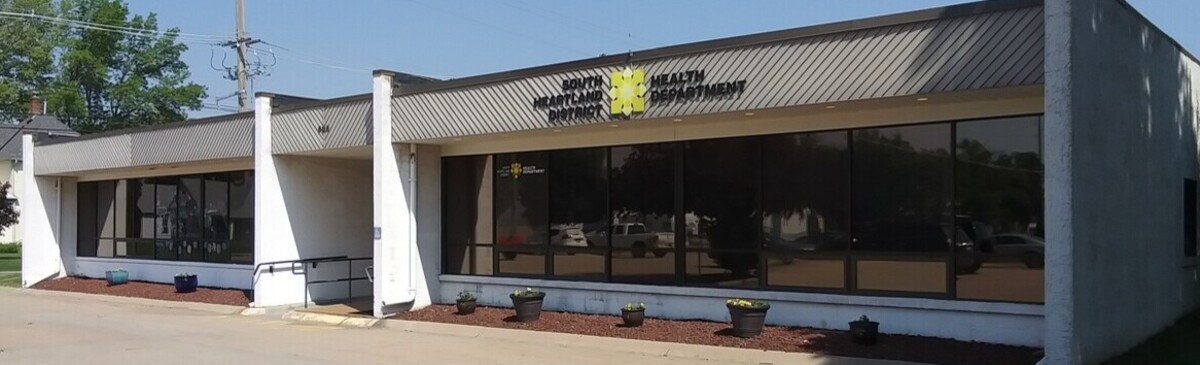
2024-25 highlights included our expansion into the west side of the SHDHD building with new paint, flooring, and windows, along with meeting rooms and storage space. Twelve staff members have refreshed private offices, in addition to two vaccination rooms, a large workroom, a waiting room, and a private consultation room.
South Heartland District Health Department is grateful for funds granted through the City of Hastings, Village of Kenesaw, and Village of Roseland to help us purchase and outfit a van for public health activities across our rural health district. Watch for us in your community, as we are better able to meet people where they are and improve access to public health services.
From CHA to CHIP
SHDHD initiated its structured process to transition from the Community Health Assessment (CHA) conducted in 2024, to a Community Health Improvement Plan (CHIP) launched in 2025. The new CHIP strategies will be implemented over the next five years.
Preparing for Emergencies
SHDHD uses the National Incident Management System (NIMS) and the Incident Command System (ICS) to ensure public health emergencies are managed in a coordinated, organized, and effective way. These systems provide a common approach that allows public health to work seamlessly with emergency management, healthcare, and community partners.
SHDHD staff NIMS and ICS trained
During the past year, SHDHD staff completed foundational NIMS and ICS training, including ICS-100 and IS-700 coursework, aligned with their roles and responsibilities. This training helps staff understand how incidents are organized, how decisions are made, and how public health fits into a larger emergency response system.
Training was reinforced through drills, exercises, and real-world public health activities, allowing staff to apply ICS principles in practical situations. By consistently training within this framework, SHDHD ensures staff are prepared to respond efficiently, communicate clearly, and support the health and safety of the communities we serve.
Environmental Health
Air Quality
Wildfire smoke can impact the quality of the air you breathe outdoors. We use five air (PurpleAir) monitors across our district to keep an eye on local air quality.
Radon, on the other hand, is a colorless, odorless, and tasteless gas, and more than half of homes tested in Nebraska have high levels. Stop by SHDHD or your local UNL Extension office to pick up a radon test kit today.
Water Quality
Did you know that 100% of residents in the SHDHD area rely on groundwater? If you own a private well, be sure to test it annually for coliform bacteria and nitrates.
Infants who ingest water high in nitrates are at risk for blue baby syndrome, and long-term nitrate exposure has been linked to certain cancers. Contact SHDHD for guidance on testing and additional resources.
Lead Poisoning Prevention
Lead is a toxic metal that can harm a child’s health, especially children age 6 and under. Kids can be exposed by breathing or swallowing lead dust or chipped lead paint.
Did you know? Homes built before 1978 may contain lead-based paint.
Lead poisoning is completely preventable. Contact SHDHD to schedule a blood lead level test!
HFA Success Story: Meeting Families Where They Are
We received a referral from DHHS on a family with an open CPS case. The report we received indicated that the mother lacked motivation, slept all day, and the child was not well-groomed. I began working with this family at the beginning of June 2024. I immediately learned that their living situation was causing some issues with their grooming. I was able to recognize this, provide some resources, and help them realize the importance of better grooming. I immediately noticed improvements in their grooming. During our visits, I began to realize that Mom had some mental health issues, which could be a reason that she was unmotivated. She began sharing some past trauma she experienced, including after the birth of her child. She also shared with me her struggles with social anxiety, which made it difficult for her to make phone calls to set up appointments
Healthy Families America is a nationally recognized, evidence-based home visitation program.
Social Media and Youth Mental Health Workshops
On April 10th and 11th, the South Heartland District Health Department (SHDHD), in partnership with five area non-profit organizations, hosted a series of community workshops focused on youth mental health and social media. Nationally recognized speaker Erin Walsh, M.A., co-founder of the Spark & Stitch Institute, led all three sessions. Held at the City Auditorium and the YWCA, the workshops drew educators, counselors, health professionals, and caregivers.
Each session was tailored to a specific audience:
- iBrain: Learning in the Age of Distraction focused on educators
- It's Complicated: Kids, Teens Screens, and Mental Health was aimed at parents and youth-serving professionals
- Status Update: Adolescents, Technology, and Mental Health provided professional development for mental health workers and youth service providers
Social media impacts depression and anxiety, sleep, academic performance, social skills and development, and body image and self-esteem
These workshops were offered as a follow-up to the SHDHD Board of Health’s resolution encouraging policies and practices that support healthy media use. They provided a valuable opportunity for community members to learn more about the impact of social media on mental health.
It was a pleasure for SHDHD to be able to offer these impactful workshops in partnership with local youth-serving organizations, which witness firsthand the urgent need for greater understanding of how social media affects young people’s mental health. SHDHD remains committed to collaborating with the workshop planning team and other community partners to continue providing educational events and resources focused on social media and youth mental well-being.
Funding for these sessions was made possible through the American Rescue Plan Act (ARPA) from the City of Hastings and generous contributions from Hastings Gives Day.
Financial Report July 2024 - June 2025
Total: $2,232,917
Expense Total: $2,029,876
- Of the total expenses, $1,373,488 is spent directly on programs
Board of Health 2024-2025
Adams County
- Charles Neumann*, County Commissioner
- Barbara Harrington
- Michelle Oldham*
Clay County
- Richard Shaw, County Supervisor
- Sandra Nejezchleb*
- Nanette Shackelford
Nuckolls County
- Jerry Grove, County Commissioner
- Roger Williams
- Megan McMeen
Webster County
- Jeff Pholmeier-Mans, County Commissioner
- Torey Kohmetscher
- Kathy Murphy Buschkoetter
Professional Representatives
- Kathleen Amyot, MD
- Erin Jobman, DVM
- Michael Kleppinger, DDS
*Officers